
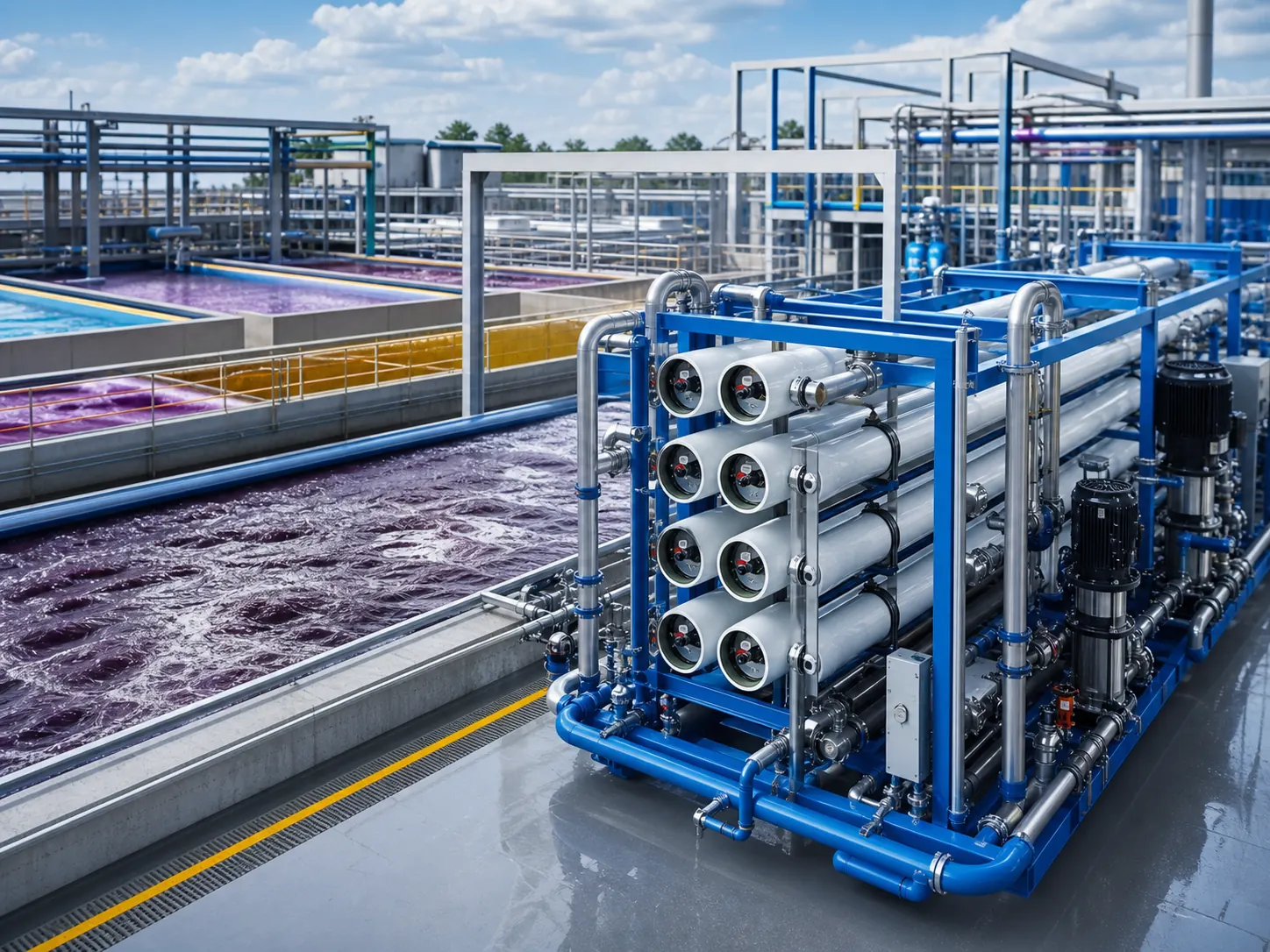
Industry Solution
繊維染色排水の再利用
Textile dyeing wastewater has high COD, deep color, and large salinity and temperature fluctuations, requiring multi-stage membrane separation for reuse.
Industry Challenges
High COD, deep color, salinity fluctuation and high-temperature feed water.
Solution Design
Anti-fouling RO plus high-pressure NF: PRO series lowers cleaning frequency, while NANO series handles high-hardness and high-sulfate stages.
Recommended Configuration
Process Design
繊維染色排水の再利用Recommended Process
From raw-water pretreatment to product-water reuse and concentrate handling, this forms a complete technical route for further review.
Equalization and cooling
Balance pH, temperature, colour, salinity and COD fluctuations to reduce shock loads.
Physicochemical + biological treatment / MBR
Remove dyes, suspended solids and biodegradable organics to reduce membrane fouling loads.
UF and fine filtration
Retain colloids and fine particles to provide stable feedwater to fouling-resistant RO.
Anti-fouling RO
Remove dissolved salts and residual organics; reuse permeate for rinsing or process makeup.
NF / high-pressure RO
Separate salts or further concentrate the stream according to its composition, reducing disposal volumes.
Reuse / evaporation and crystallization
Return permeate to production and further treat concentrate to discharge or near-ZLD targets.
Textile wastewater varies with dyes, sizing agents, auxiliaries, temperature and salinity. Water analysis and bench testing are recommended before membrane treatment.
More Solutions
More Solutions
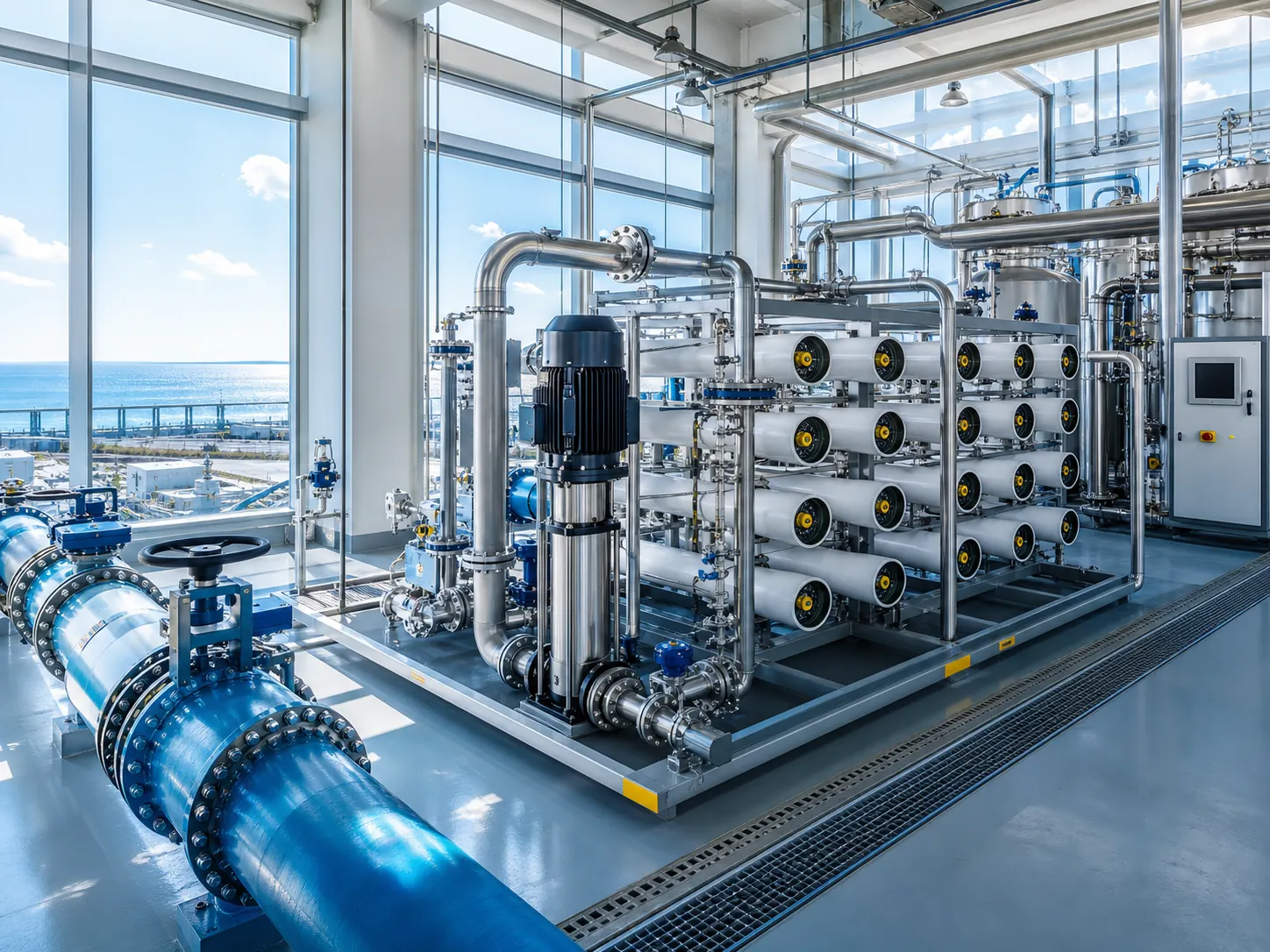
海水淡水化
High-pressure seawater desalination membrane solutions for coastal industrial make-up water, island water supply and municipal backup sources.
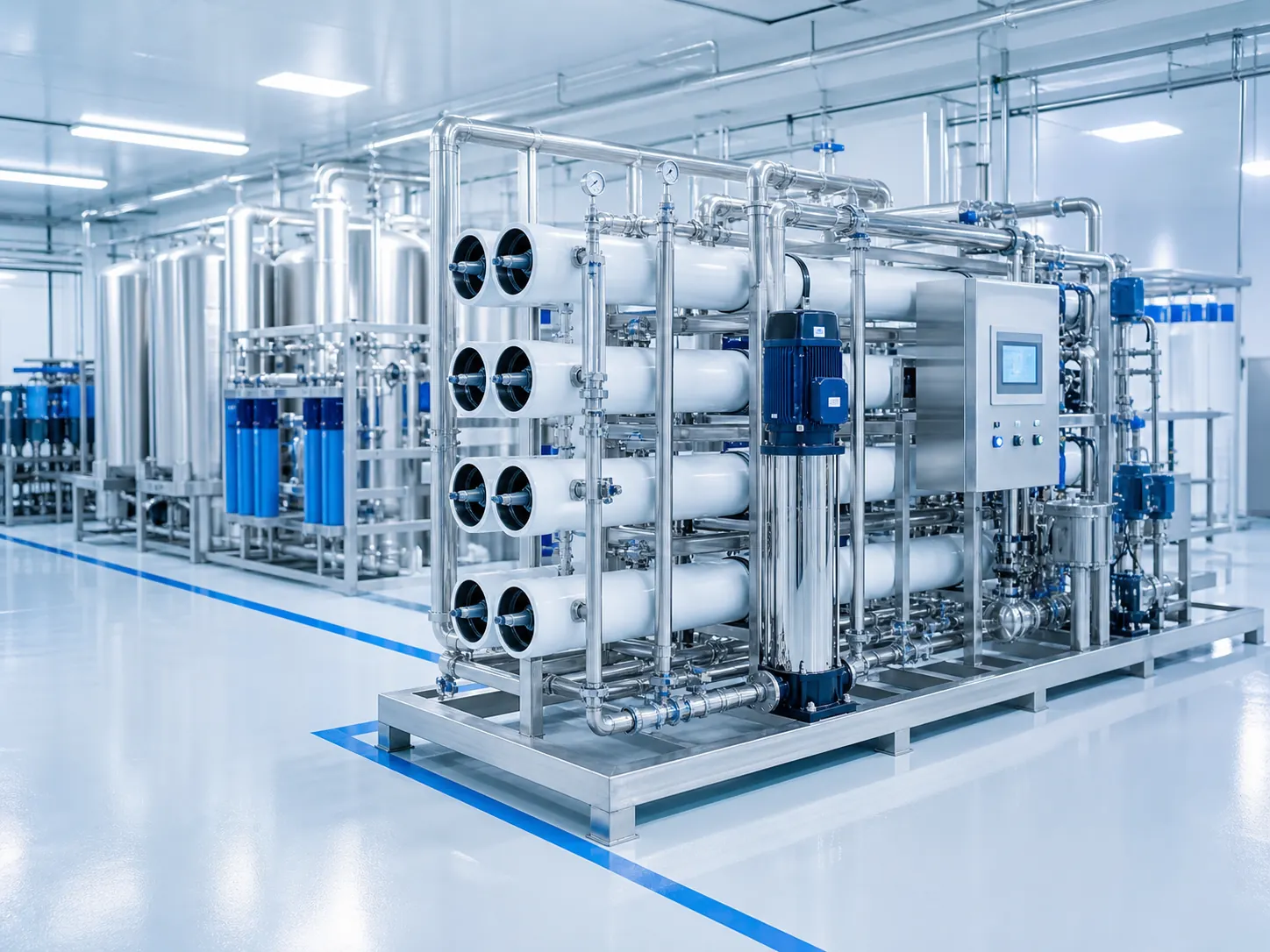
電子向け超純水
Semiconductor, panel and photovoltaic manufacturing have very high requirements for ultrapure-water resistivity, TOC and particles.
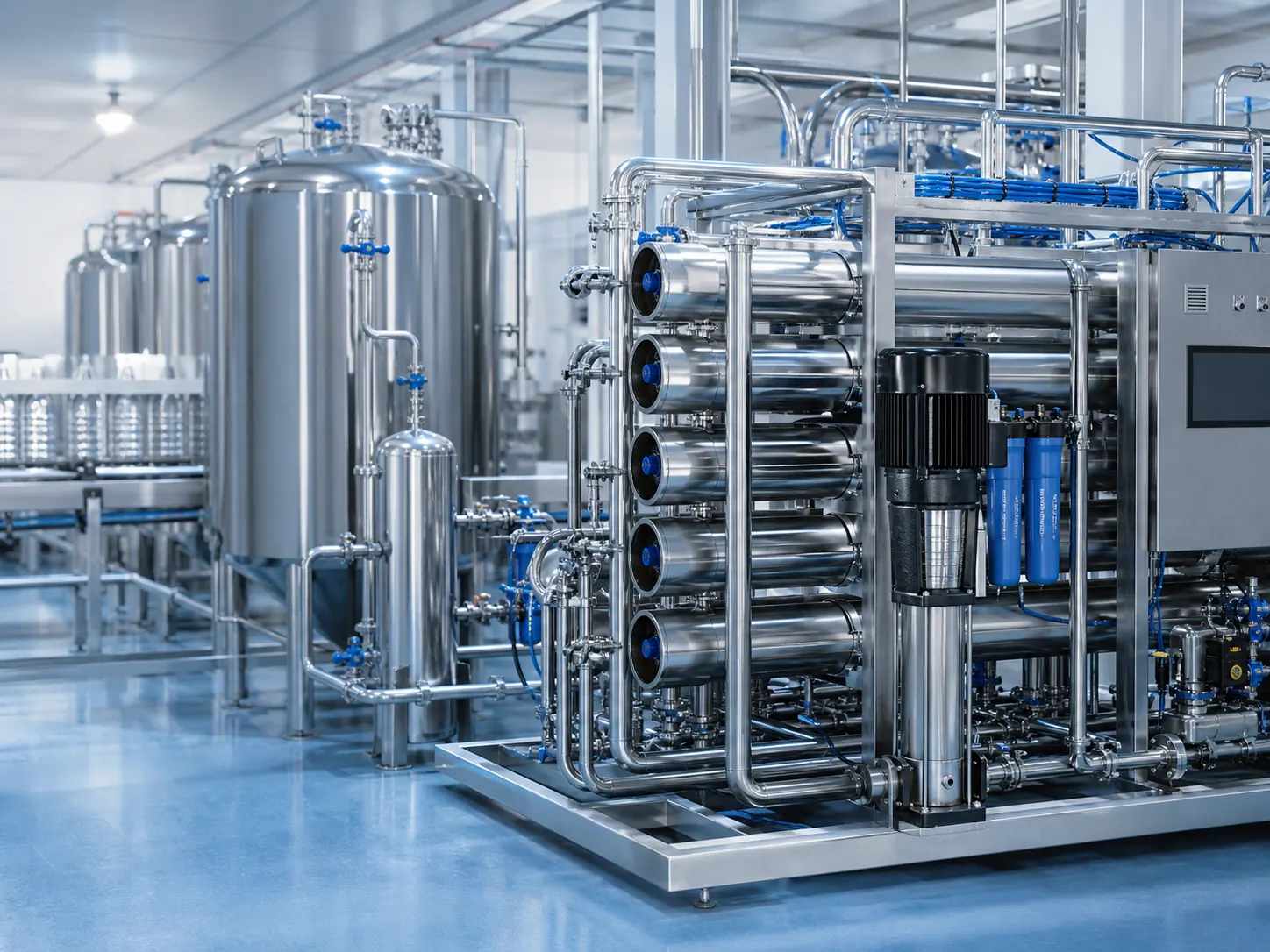
食品・飲料
Beverage recipe water, process water and CIP cleaning water must balance hardness control, taste retention and hygiene standards.
Need to further confirm solution boundaries?
Provide feed-water quality, capacity and product-water targets to get selection advice for the current project.